
A Level 2 charger runs on a 240-volt circuit and is the usual choice for charging at home overnight. The first question is always whether your panel and service have room for it. Often they do. When they don’t, there are options, from load management to a panel upgrade, and we’ll walk you through them.
What we do
- Panel and load checkWe look at your panel and what’s already on it before recommending anything.
- Dedicated 240-volt circuitSized for your charger, with the right breaker and wire.
- Charger mounting and hookupWe recommend hardwiring. If you need a plug-in, we use an EV-rated receptacle with GFCI protection, in the garage or outside.
- Panel upgrades when neededIf the panel truly can’t handle it, we can do the upgrade too.
- BusinessesChargers for workplaces and commercial properties.
Hardwired or plug-in? What we recommend
When it’s practical, we recommend a hardwired charger over a plug-in unit on a NEMA 14-50 receptacle:
- No receptacle to overheat. Hours of charging are hard on receptacles that aren’t built for it, and on terminals that aren’t tightened to spec.
- Built-in protection. Every listed charger has its own shock protection. A receptacle for EV charging also needs a GFCI (NEC 625.54), and some chargers trip GFCI breakers during their startup self-test.
- Only three wires for a 240 V-only charger: two hots and a ground.
- Room to grow. A 14-50 tops out at 40 A of charging; many hardwired chargers can be set to fit the circuit.
If a plug-in charger is the right fit for you, we install an EV-rated receptacle, torque the terminals to spec and protect it with a GFCI. Read the full explanation: EV charger safety: why we recommend hardwired over a plug-in 14-50.
Adding a charger without a bigger service
| Approach | How it works | Good for |
|---|---|---|
| Service upgrade | A larger service and panel | Homes adding several big loads at once |
| Energy management system | Watches the service and turns the charger down when needed (Eaton) | Full panels where an upgrade is costly or slow |
| Smart panel | Circuit-level control and monitoring | Homes adding batteries, solar or more EVs |
| Power sharing | Two or more chargers share a set amount of power (NEC 625) | Two-EV households, multifamily parking |
EV-ready, for new homes
California’s green building code asks new one- and two-family homes and townhouses with attached garages to be “EV capable”: a raceway to the parking spot, panel capacity and breaker space for a 40-amp, 208/240 V circuit, with the panel space labeled (California HCD). If you’re building, we’ll set it up so adding the charger later is quick.
For apartment and HOA parking, networked chargers can add access control and scheduling, so only residents charge and the load is managed.
From our jobs
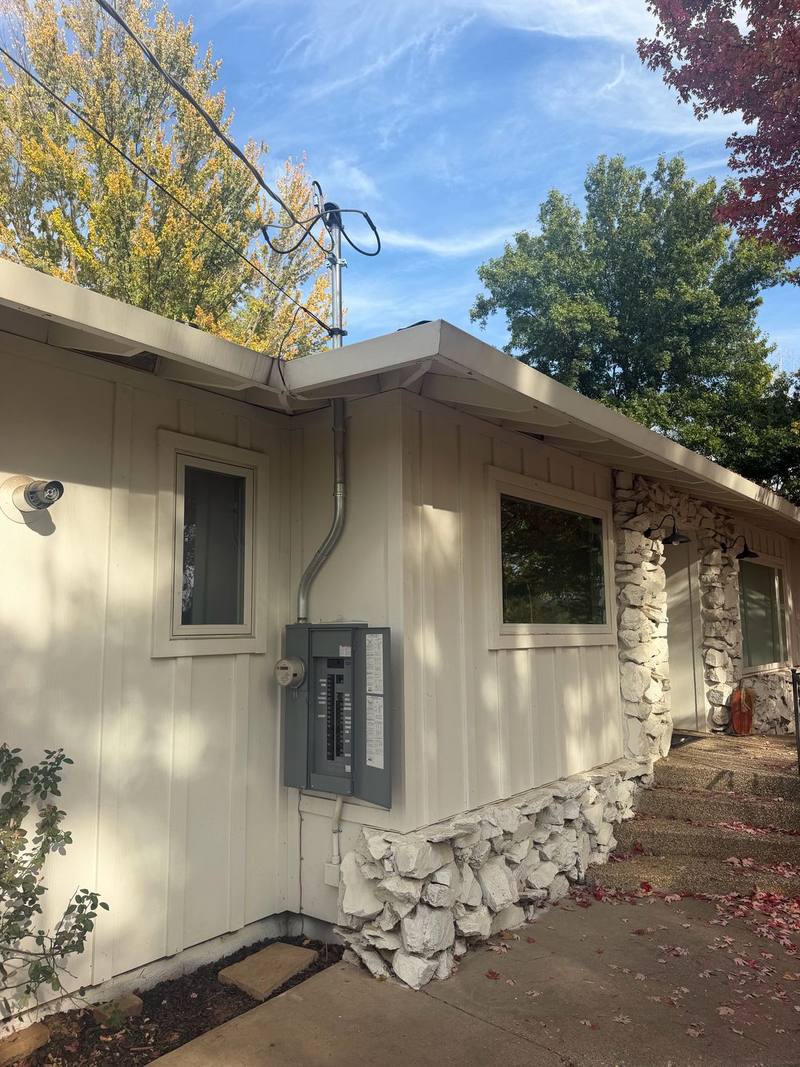
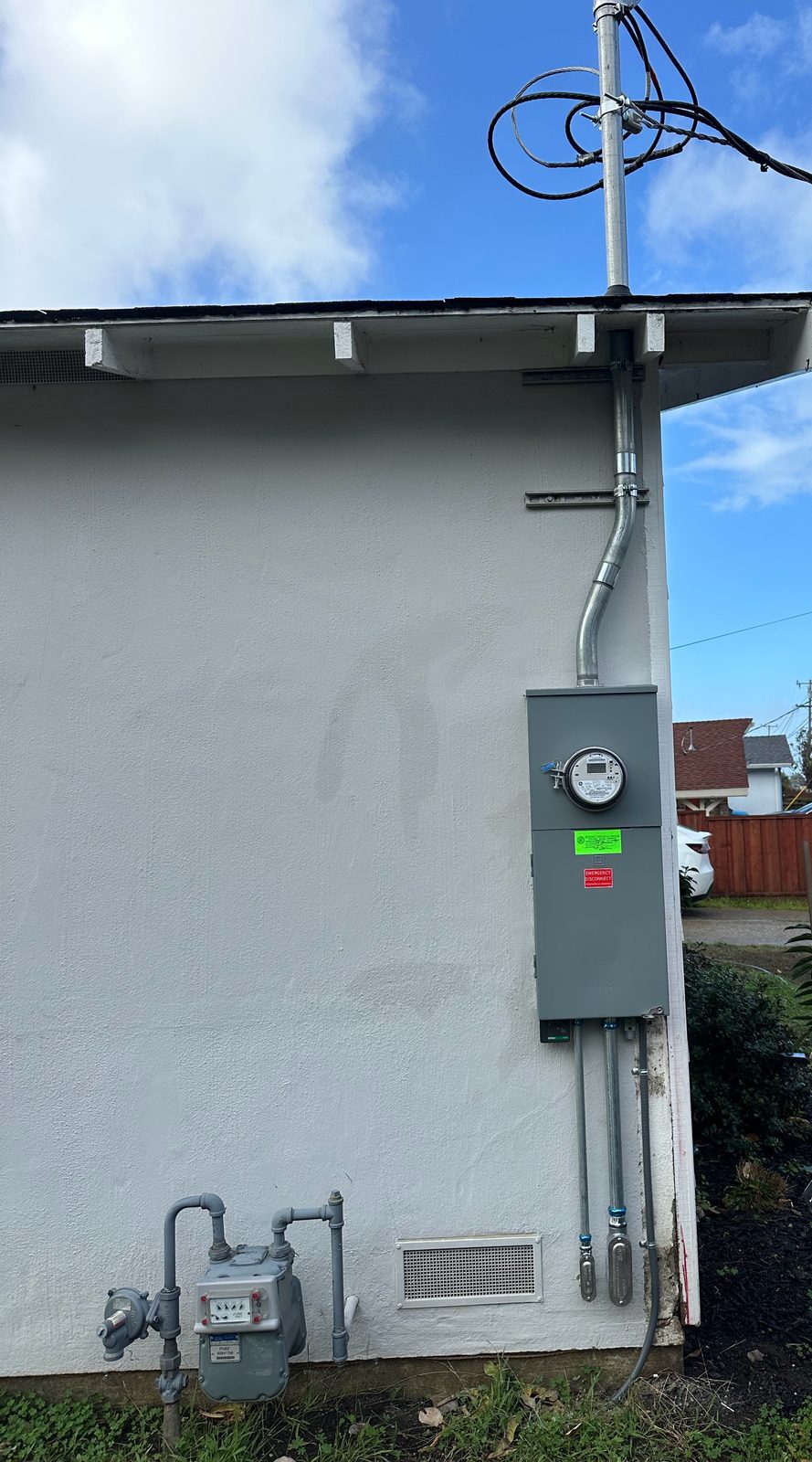
How the job goes
- 1Call or send a quote request
Tell us the charger you have (or want), where you park, and send a photo of your panel if you can.
- 2Panel check and estimate
We check the load and the run from the panel to the charger, then give you a clear estimate.
- 3Permit
We apply for the EV charger permit with your city or county.
- 4Install
We run the circuit, mount and connect the charger and test it.
- 5Inspection and walkthrough
We meet the inspector and show you how everything works.
Permits, inspections and PG&E
A home Level 2 charger is a new 240-volt circuit, so it needs an electrical permit and an inspection. California law (AB 1236 and AB 970) requires every city and county to offer a streamlined, expedited permit process for EV chargers, with review limited to health and safety.
Inside Auburn city limits, electrical permits come from the City of Auburn Building Division, which takes permit applications online. In unincorporated areas, such as North Auburn, it’s Placer County Building Services. Elsewhere it’s that city or county’s building department. We pull the permit, schedule the inspection and meet the inspector.
If the charger needs a larger service, PG&E also wants an application through Your Projects before the change. We take care of that too.
From our Google reviews
I had a fantastic experience with Innovative Electrical Services (IES), Inc. They installed a new EV charger at my home and the entire process was smooth from start to finish. … The owner, Walter, was also great to work with—very responsive, flexible, and genuinely cares about customer satisfaction. … The installation itself was clean, efficient, and done right the first time.
They are the best!!! Very professional, flexible, easy to talk to, very fair on the cost of their work. They can do anything you need at your home. They have installed fans where none existed, a charger for my new EV automobile. …
5.0 on Google · 108 reviews Read all our reviews on Google →
Common questions
Do I need a permit for an EV charger?
Yes. A Level 2 charger is a new 240-volt circuit, so it needs an electrical permit and an inspection. California requires cities and counties to keep EV charger permits streamlined.
Will my panel handle an EV charger?
Often, yes. We check the panel and your existing load first. If it’s tight, a smaller charger setting or load management can sometimes avoid a panel upgrade.
Should my charger be hardwired or plugged in?
When it’s practical, we recommend hardwired: there’s no receptacle to wear out or overheat, the charger’s own shock protection does the job, and a 240 V-only charger needs just three wires. If a plug-in suits you better, we install an EV-rated receptacle with GFCI protection, as the code requires.
Can you install a charger I already bought?
Yes. Tell us the make and model and we’ll plan the circuit around it.
Do you install chargers for businesses?
Yes. We install chargers and the circuits for them at businesses and commercial properties.
Request a free quote
Free estimates, no pressure. Tell us a little about the job and we’ll get back to you. Or call (530) 401-7419, answered 24/7.
Official sources
- California GO-Biz: EV charging permit streamlining (AB 1236 / AB 970) business.ca.gov
- City of Auburn Building Division www.auburn.ca.gov
- Placer County Building Services www.placer.ca.gov
- PG&E: Residential project resources (changing your service) www.pge.com
- Mike Holt, 2023 NEC Article 625 Electric Vehicle Power Transfer System www.mikeholt.com
- Eaton: NEC 2023 energy management updates www.eaton.com
- California HCD: 2022 CALGreen residential mandatory measures (EV capable) www.hcd.ca.gov
Permit and utility information checked against the sources above in November 2026. Rules and processes can change; your city or county building department and PG&E have the final word.