
Low-voltage systems are easy to overlook until they don’t work. We wire them neatly, label them clearly and leave room to grow, whether it’s a home network, cameras for a shop, or fire alarm devices in a commercial building. Prewiring a new home for smart features? See smart home and automation.
What we do
- Fire alarmFire alarm wiring and device installation.
- Access control and gatesCard readers, keypads, intercoms and gate entry, including by license plate.
- Security camerasAI cameras with virtual fences, plate recognition and battery backup.
- Vape detectionCamera-free vape and smoke sensors for restrooms and locker rooms.
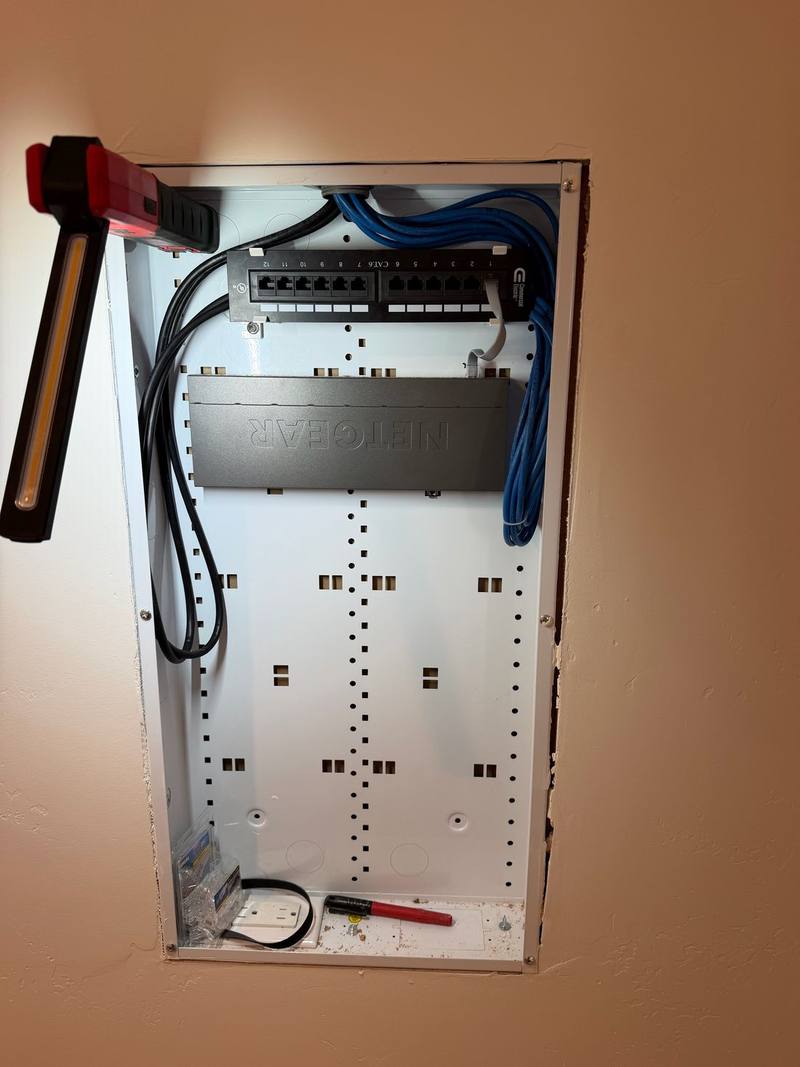
- Structured cablingCat6 cabling, patch panels and structured media cabinets.
- Fiber opticFiber optic cabling between rooms, floors and buildings.
- NetworkingNetwork switches, data drops and equipment racks.
Security and smart building technology
Low-voltage work has changed a lot. Cameras now recognize people and plates, gates open for a license plate, and ceiling sensors can catch vaping in restrooms without a camera. We’ve written a page on each, with diagrams, comparisons and sources:
From our jobs
How the job goes
- 1Call or send a quote request
Tell us what you want to connect, watch or protect.
- 2Walkthrough and estimate
We look at the building and the cable routes, then give you a clear estimate.
- 3Plans and permits when needed
Fire alarm work usually needs plans reviewed by the local fire authority. We help with that.
- 4Install and test
Neat cable runs, clear labels, and every device tested.
- 5Inspection and handoff
We meet the inspector where required and walk you through the system.
Permits, inspections and PG&E
Fire alarm systems are reviewed, inspected and tested by the local fire authority. In unincorporated Placer County, CAL FIRE/Placer County Fire lists plan check, inspection and testing for alarm systems under NFPA 72 (fee schedule); fire districts and cities handle their own areas. Cameras, data and access control usually need less, but larger commercial jobs can still need a permit.
Inside Auburn city limits, electrical permits come from the City of Auburn Building Division, which takes permit applications online. In unincorporated areas, such as North Auburn, it’s Placer County Building Services. Elsewhere it’s that city or county’s building department. We pull the permit, schedule the inspection and meet the inspector.
It may seem odd to describe electrical work as beautiful, but that’s precisely what Walter’s work is—beautiful!
Common questions
Does fire alarm work need a permit?
Usually, yes. Fire alarm systems are reviewed, inspected and tested by the local fire authority. We help with plans and inspections.
Do you install security cameras for homes?
Yes, for homes and businesses, including the wiring. Our security cameras page covers virtual fences, face and plate recognition, and recording.
Can you install vape detectors?
Yes. We wire and set up camera-free vape sensors for schools, apartments and workplaces. See our vape detection page for how they compare.
Can you run network cable in an existing house?
Yes. We plan routes that keep patching to a minimum and label every run.
Do you work on fiber?
Yes. Fiber optic cabling between rooms, floors and buildings.
Request a free quote
Free estimates, no pressure. Tell us a little about the job and we’ll get back to you. Or call (530) 401-7419, answered 24/7.
Official sources
- Placer County Fire (CAL FIRE): fire protection review and inspection fees www.placer.ca.gov
- City of Auburn Building Division www.auburn.ca.gov
- Placer County Building Services www.placer.ca.gov
Permit and utility information checked against the sources above in November 2026. Rules and processes can change; your city or county building department and PG&E have the final word.