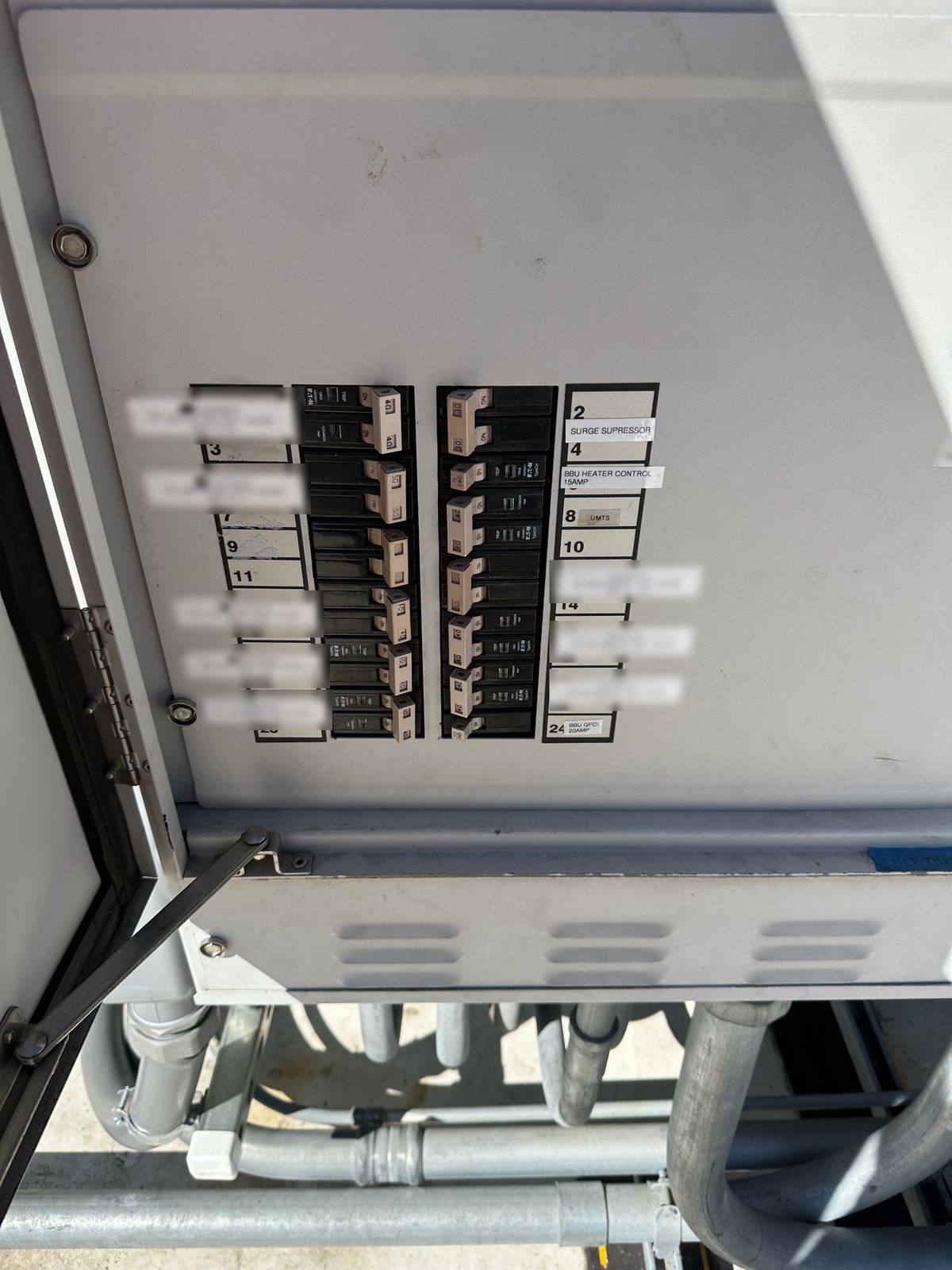
What it usually means
A breaker trips when more current flows than the circuit’s wire is meant to carry, or when it senses a fault. That’s a good thing. It’s protecting your wiring. The question is why it’s happening. The usual reasons:
- Too much on one circuitA space heater, hair dryer, microwave or vacuum can each use a big share of a circuit. Run two at once and the breaker trips. This is the most common reason, and it often shows up in winter or in kitchens and bathrooms.
- One appliance or cord with a problemIf it only trips when one thing is plugged in or turned on, that appliance or its cord may have a short or ground fault inside.
- A fault in the wiringA damaged cable, a loose or burned connection, a nail or screw through a wire, or water in an outdoor box can make a breaker trip, sometimes with nothing plugged in at all.
- AFCI or GFCI protection doing its jobThese newer breakers and outlets look for arcing and ground faults that a standard breaker can’t see. They trip for real problems, and sometimes for a device that doesn’t play well with them. Either way, it’s worth finding out which.
- A worn-out breakerBreakers don’t last forever. It’s less common, but a breaker can get weak, or the connection where it plugs into the panel can wear.
Safe for you to check
- Turn off or unplug the things that were running on that circuit before you reset (ESFi).
- Find the tripped breaker. Its handle will be at OFF or stuck in the middle. Push it all the way to OFF, then back to ON (ESFi).
- Reset it once. If it trips again right away, even with things unplugged, leave it off and call.
- If it only trips with one appliance running, stop using that appliance and have it checked.
- Spread out big loads. Plug major appliances straight into the wall, not into extension cords or power strips (NFPA).
- Test AFCI and GFCI breakers with their TEST button once a month (ESFi).
Leave these alone
- Don’t keep resetting a breaker that keeps tripping. Frequent trips are a sign of a problem that a qualified electrician should check (ESFi).
- Don’t hold, tape or wedge a breaker on, and never swap in a bigger breaker. The breaker is sized to the wire. A bigger one lets the wire overheat, which is a fire risk (CPSC).
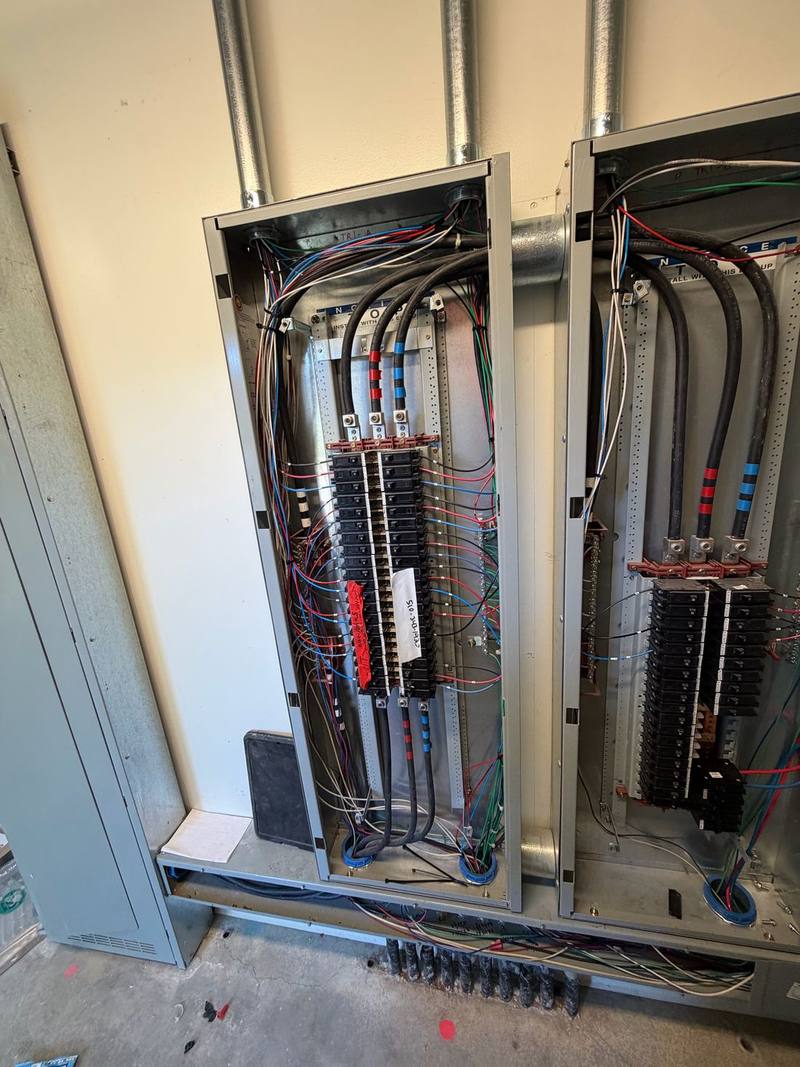
- Don’t take the panel cover off. The parts behind it stay live even with breakers off.
- Don’t reset it if the breaker or panel is hot, buzzing, smells burnt or has scorch marks. Leave it off and call.
How IES helps
- 1We find the cause
We test the circuit, check the connections and the breaker, and track down the appliance, outlet or spot in the wiring that’s causing it.
- 2We fix what’s wrong
That might be a new circuit so the kitchen or space heater has its own, repairing a damaged run of wire, replacing a worn breaker with one listed for your panel, or sorting out an AFCI or GFCI that keeps tripping.
- 3If the panel itself is the problem
If your panel is worn out or out of room, we can change it out. We handle the permit, the inspection and scheduling PG&E’s disconnect and reconnect. You just say yes.
Estimates are free. Call (530) 401-7419, answered 24/7, or use the form below.
Common questions
Is it dangerous if my breaker keeps tripping?
The trip itself is the breaker protecting you. But a breaker that trips again and again means something is wrong, like an overload, a bad appliance or a wiring fault, and it should be checked by a licensed electrician.
Can I just put in a bigger breaker?
No. The breaker is matched to the size of the wire. A bigger breaker lets more current flow than the wire can safely carry, so the wire can overheat inside your walls. Fix the cause instead.
Why does it trip when nothing is plugged in?
That usually points to a fault in the wiring, an outlet, a fixture or the breaker itself. Leave it off and call an electrician.
Why does my AFCI or GFCI breaker keep tripping?
They trip for arcing or for current leaking where it shouldn’t, like through water or a damaged cord. Sometimes it’s a real fault, and sometimes it’s a device that doesn’t get along with them. We can test the circuit and tell you which.
Can a breaker wear out?
Yes. It’s not the most common cause, but breakers and the spots where they connect to the panel can wear over time. An electrician can test it and replace it with one listed for your panel.
Read more
- Why does my breaker keep tripping? Guide
- GFCI vs AFCI: what they do and how to test them Guide
- Wire size and breaker size: how they go together Guide
- Can my panel handle it? (EV, heat pump, hot tub) Guide
- How a Circuit Breaker Works (Thermal and Magnetic Trips) Learn
- GFCI and AFCI: What They Do and Where the 2023 NEC Wants Them Learn
- Load Calculations: Does Your Panel Have Room? (NEC Article 220) Learn
Related problems
- Outlets stopped workingCheck for a tripped GFCI upstream first. Here’s where to look.→
- Buzzing panel or outletA faint hum can be normal. Crackling or sizzling isn’t.→
- Burning smell or hot outlet UrgentUrgent: what to do right now, and what not to touch.→
- Told you need a panel upgrade?PG&E, a solar or an EV installer said so? Get a clear second opinion.→
Request a free estimate
Free estimates, no pressure. Tell us a little about the job and we’ll get back to you. Or call (530) 401-7419, answered 24/7.
Sources
- ESFi: Understanding your home electrical system www.esfi.org
- ESFi: Indoor electrical safety check (PDF) www.esfi.org
- NFPA: Electrical safety tips (PDF) www.nfpa.org
- ESFi: Fuse and breaker breakdown www.esfi.org
- U.S. CPSC: Home electrical safety checklist (PDF) www.cpsc.gov
- PG&E: Report an emergency www.pge.com
General safety information for homes, checked against the sources above in November 2026. Every home is different and this is not a substitute for an on-site look by a licensed electrician. Never work inside a panel, at the meter or on live wiring. In an emergency, call 911.