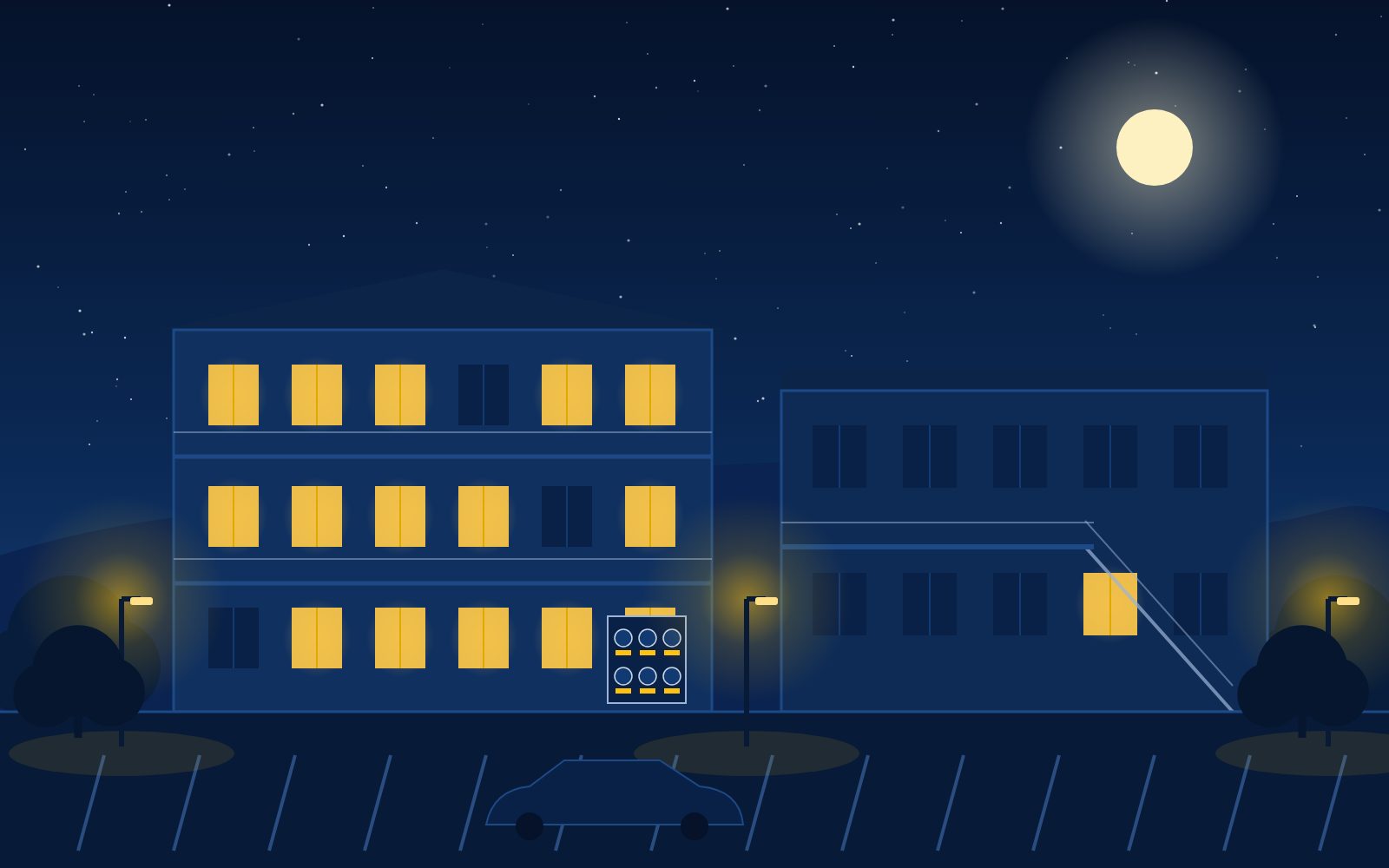
Property management work is close to our hearts. Every door on a work order is somebody’s home: a family getting the kids out the door, someone sleeping after a night shift, a grandparent who just wants the lights back on. We never forget that.
You have no idea what some people are going through. So we show up kind and patient, we treat every resident with respect, and we leave every apartment cleaner than we found it, whether the resident is home or not. If we can bring a little light into somebody’s day while we fix their lights, that’s a good day for us.
For managers and owners, we try to make your job easier: honest recommendations, clear updates after every visit, and a phone that gets answered. IES is family-run by Walter and Karolyn, with a crew we trust. Walter answers his own phone nearly all the time, day or night, and when he can’t, our answering service takes the call. Looking after a mobile or manufactured home community too? Here’s how we help mobile and manufactured home communities.
What we do
- Unit panels and service upgradesReplacing worn-out or unsafe unit panels, and upgrading the building’s service when it needs more power for today’s loads.
- Meter banks and multi-meter centersRepairs and replacements, with every meter, disconnect and unit clearly and permanently marked, coordinated with PG&E.
- Common-area, parking and exterior lightingStairwells, walkways, carports, entries and parking lots, with LED fixtures and photocells or timers so the property feels safe at night.
- Laundry roomsWasher and dryer circuits, GFCI protection, lighting, and help when breakers trip or machines lose power.
- EV charging for residentsShared chargers, power-sharing setups, and a single charger at a resident’s assigned space when they ask for one.
- Smoke, CO and fire alarmHardwired smoke and CO alarms in units, and the power and wiring for building fire alarm systems.
- Access control, cameras, gates and intercomsEntry systems residents can answer from their phones, gate operators, card readers and cameras for shared spaces.
- Turnovers and make-readyOutlets, switches, covers, fixtures and a safety check between residents, so the next family moves into a home that’s ready.
- Emergency calls, 24/7A unit with no power, a burning smell, sparking or water near electrical. Call any hour and we’ll help make it safe.
- Older buildingsAluminum branch wiring, older panel brands and shared neutrals found and fixed the right way.
When it’s worth a look
- Residents mention warm outlets or switches, flickering lights or a hot-plastic smell
- Breakers that trip again and again in a unit or the laundry room
- Dark stairwells, walkways, carports or parking areas
- Meters or disconnects that aren’t clearly marked with the unit they serve
- Older panel brands, or aluminum branch wiring from the mid-1960s to the 1970s
- Residents asking about EV charging
How we treat your residents
The way we work in someone’s home says more about us than any wire we pull. These are the things we hold ourselves to, every visit:
- Kindness firstWe introduce ourselves, explain what we’re there to do, and answer questions patiently. A smile and a little respect go a long way, especially on a hard day.
- Cleaner than we found itEvery apartment, every time, whether the resident is home or not. Dust, bits of wire, packaging: it all leaves with us.
- Privacy and respectWe work only where the job is, treat people’s belongings with care, and keep their home the way they keep it.
- Safety, alwaysIf we see something unsafe while we’re there, we tell you, and we make it safe before we leave.
We also follow your notice process. California generally expects a landlord to give residents reasonable written notice before entering, during normal business hours, except in an emergency (Civil Code 1954). When you send notice for a time, we show up at that time.
How power reaches each unit
Most apartment buildings get one service from the utility, then split it at a meter bank: one meter for each apartment and a “house” meter for everything shared. Knowing which meter feeds which unit sounds simple, but after years of remodels and unit renumbering, labels go missing or end up wrong. That’s more than an annoyance. In an emergency, it’s how someone knows which switch to shut off.
- 1The utility’s transformer. PG&E owns it, and it owns the meters themselves too.
- 2The building’s main. Where the service lands. The street address is marked here.
- 3The meter bank. One meter per unit plus a house meter. Each meter, its disconnect and the unit it serves should be permanently marked.
- 4Unit panels. Each meter feeds the panel inside that apartment.
- 5The house panel. Stair and parking lights, laundry, gates, intercoms, the fire alarm and shared EV chargers.
PG&E’s Greenbook asks that each meter position, its service disconnect and the unit it serves be permanently marked, with an engraved or riveted plate or stenciled paint, not tape or label-maker stickers. When we work on a meter bank, we check those markings against the actual units and fix what’s wrong.
Older buildings: what we look for
Older apartments have lots of character, and a few electrical habits worth knowing about. None of these mean you have to panic. They mean it’s worth a careful look by someone who will be straight with you.
| What we find | Why it matters | What we do |
|---|---|---|
| Small aluminum branch wiring | Common in buildings wired from the mid-1960s into the 1970s. Connections at outlets, switches and splices can loosen and overheat. The CPSC has published guidance on repairs. | Repair the connections with methods the CPSC recognizes, or rewire with copper where it makes sense. See our aluminum wiring guide. |
| Older panel brands | Some brands have a long problem history, and parts for old panels can be hard to find. | Inspect, then repair or replace. See problem panel brands and the breaker family tree. |
| Shared neutrals | One neutral wire shared by two circuits. Fine when done right; risky when a breaker change or remodel splits them up. | Trace them and make sure they’re on handle-tied or two-pole breakers. Learn more about shared neutrals. |
| Two-prong outlets and missing GFCI | Ungrounded outlets and no GFCI protection in kitchens, baths and laundry areas. | Add GFCI protection or grounding the right way. See two-prong outlets. |
| A service that’s run out of room | New EV chargers, heat pumps and appliances add up across many units. | A load calculation first, then a plan: power sharing, a panel change or a service upgrade. |
EV charging for residents
More residents are driving electric, and more of them are asking. In California, Civil Code 1947.6 generally requires a landlord to approve a resident’s written request to install a charger at their assigned parking space, for leases signed, extended or renewed since July 1, 2015. The resident generally pays for the installation and the electricity, and the landlord can set reasonable conditions. There are exceptions, for example when parking isn’t part of the lease, the property has fewer than five parking spaces, or chargers already serve at least 10 percent of the spaces. We’re electricians, not lawyers, so please check the details with your attorney.
Our part is the electrical: whether the panel and the service can handle it, where the circuit can run, how it gets metered, and whether power-sharing chargers make more sense than one big circuit per space. A hardwired charger is also safer than a long extension cord across a parking lot; here’s why plug-in vs hardwired matters. More on our EV charger installation page.
Turnovers, alarms and make-ready
Turnover is the best moment to catch small things before they become a call at 2 a.m. California puts the testing and upkeep of smoke alarms in rented apartments on the owner, and asks that they work when a new tenancy starts (Health and Safety Code 13113.7). Units with a gas appliance, fireplace or attached garage also need a carbon monoxide alarm (Health and Safety Code 17926). Our smoke and CO alarm guide covers placement in plain words.
Here’s a simple electrical checklist you or your maintenance team can use on a turn. Anything that doesn’t pass, we’re a call away.
0 of 8 done
What working with us looks like
We want to be the electrician you never have to chase. Here’s what you can count on:
- A phone that gets answeredWalter answers his own phone nearly all the time, 24/7. When he can’t, our answering service takes the call.
- Clear updatesWhat we did, what we found and what’s worth planning for, after every visit, so you can pass it on to owners or your board.
- Honest adviceIf a small repair is enough, we’ll tell you. If something can wait, we’ll tell you that too.
- Permits and PG&E handledPermits, inspections and the utility side, so you don’t have to juggle them.
Call (530) 401-7419 any time, day or night, or request a free estimate. Whether it’s one unit or the whole property, we’d be glad to help. Also caring for a mobile or manufactured home community? See our mobile & manufactured home communities page.
How the job goes
- 1Call or send a request
Call (530) 401-7419 any time, 24/7, or send a quote request. Tell us about the property, what’s going on, and the best way to reach you.
- 2Walkthrough and free estimate
We look at the units, the meter bank and the common areas, then give you a clear estimate in plain words. If a smaller fix is enough, we’ll say so.
- 3Notice and scheduling
We follow your notice process, work around residents’ schedules, and plan any shutoffs so they’re as short as we can make them.
- 4The work, done with care
Permits, inspections and PG&E handled. Kind and respectful with every resident, and every space left cleaner than we found it.
- 5We report back
You hear what we did, what we found and anything worth planning for, so you have it for your records and your owners.
Permits, inspections and PG&E
Inside Auburn city limits, electrical permits come from the City of Auburn Building Division, which takes permit applications online. In unincorporated areas, such as North Auburn, it’s Placer County Building Services. Elsewhere it’s that city or county’s building department. We pull the permit, schedule the inspection and meet the inspector.
Meter bank replacements and service upgrades also go through PG&E, which sets the requirements for the service and meters and schedules the disconnect and reconnect. We open the request through PG&E’s Your Projects, plan the shutoff with you so residents get notice, and meet PG&E on site. On multi-meter buildings, PG&E’s Greenbook asks that each meter position, its disconnect and the unit it serves be permanently marked; tape and label-maker stickers don’t count as permanent.
From our Google reviews
Absolutely recommend IES they were quick to answer the phone. Walter was able to quickly come out and diagnose and fix the problem we were having with a fault in one of our circuits. Very professional, thorough and clean. We will be using them going forward.
I appreciate the time Walter takes to make sure we understand the issue and if we have any concerns. I like that safety is always top of mind!
5.0 on Google · 108 reviews Read all our reviews on Google →
Common questions
Do you work with property managers, owners and HOAs?
Yes, and we love this work. From a single work order to a bigger upgrade, we’re glad to help. Call (530) 401-7419 any time, 24/7, or request a free estimate.
Can you take emergency calls at night or on weekends?
Yes. We’re available 24/7. Walter answers his own phone nearly all the time, and when he can’t, our answering service takes the call so you’re never left wondering.
Will you work in a unit when the resident isn’t home?
When you’ve given notice and asked us to, yes. We treat the home exactly as if the resident were standing there, work only where we need to, and leave it cleaner than we found it.
Do residents have a right to EV charging?
California Civil Code 1947.6 generally requires a landlord to approve a resident’s written request to install a charger at their assigned parking space, with some exceptions, and the resident generally pays for the installation and the electricity. We’re electricians, not lawyers, so check the details with your attorney. We’re happy to look at what the property’s electrical can support.
Should we replace old panels and aluminum wiring?
Not every older panel or wire is an emergency, but some panel brands and small aluminum branch wiring deserve a careful look. We’ll tell you honestly what we see, what should be fixed now and what can be planned for later.
Do you handle permits, inspections and PG&E?
Yes. We pull the permit, meet the inspector and coordinate with PG&E on meter and service work.
Are estimates free?
Yes. Estimates are free. We’re licensed C-10 electrical contractor #1081222, and we work throughout California.
Request a free quote
Free estimates, no pressure. Tell us a little about the job and we’ll get back to you. Or call (530) 401-7419, answered 24/7.
Sources
- City of Auburn Building Division www.auburn.ca.gov
- Placer County Building Services www.placer.ca.gov
- PG&E: Building and renovation (Your Projects) www.pge.com
- PG&E Greenbook (Electric and Gas Service Requirements), section 7.7: identifying and marking meters www.pge.com
- California Civil Code 1954 (landlord entry and notice) leginfo.legislature.ca.gov
- U.S. CPSC: Repairing Aluminum Wiring www.cpsc.gov
- California Civil Code 1947.6 (EV charging stations at rental property) leginfo.legislature.ca.gov
- California Health and Safety Code 13113.7 (smoke alarms in dwelling units) leginfo.legislature.ca.gov
- California Health and Safety Code 17926 (carbon monoxide devices in dwelling units) leginfo.legislature.ca.gov
Laws and utility rules are summarized in plain words, not quoted, and they can change. We’re electricians, not lawyers, so please check lease, notice and EV questions with your attorney or association. Checked against the sources above in November 2026.